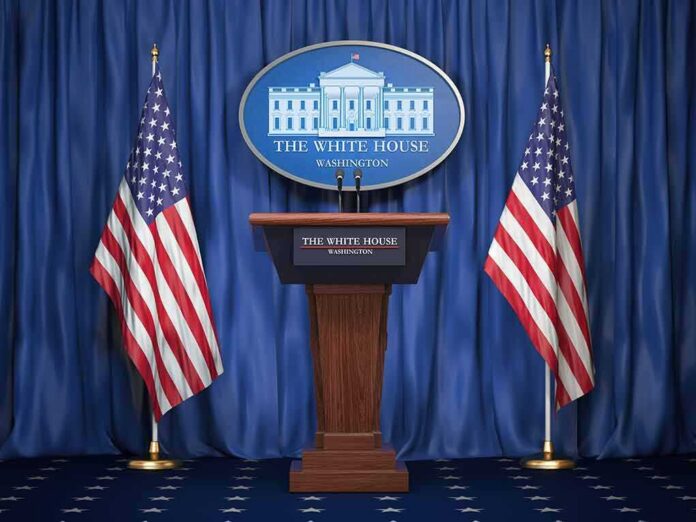
Media outrage erupted after President Trump said CNN, MS NOW, and Politico were barred from the White House “effective immediately.”
Story Highlights
- Trump named three outlets for exclusion over “fake news” and persistent negative coverage.
- Reports said there was no immediate enforcement after the announcement.
- CNN claimed any ban would be an unconstitutional assault on press freedom.
- The move fits past fights over access and viewpoint bias in White House press spaces.
What Trump Announced And Who It Targets
President Trump announced a ban on CNN, MS NOW, and Politico from the White House and linked the action to “fake news” and coverage he called unfair to Republicans. Reports said he singled out those outlets by name, not the entire press corps. Trump’s framing charged those organizations with bias against his administration and the party. The announcement arrived amid long-running disputes over hostile coverage and questions about how the White House manages access to its facilities.
Major outlets described the statement as a sharp escalation in an old fight with the press. The reporting said the decision was selective, not a blanket shutdown of media access. That focus matters for readers who worry about government overreach. Supporters see a targeted step against outlets they believe mislead viewers. Critics see retaliation for speech. The difference will shape any legal test if the government moves from talk to action on credentials and entry rules.
What Happened Next Inside The Press Room
CNN reported there was no immediate sign the White House enforced the ban. Its reporters were not shown being removed or blocked as the news broke. That gap between a public vow and on-the-ground action created confusion and fed claims that the move was more warning than policy. The absence of a released directive or credential order left key details unclear, including scope, timing, and process for any challenges or appeals.
That uncertainty also shaped the media response. Some headlines treated the statement as a major break with norms. Others stressed that access had not changed yet. Readers should separate rhetoric from recorded steps. A binding policy normally leaves a paper trail, sets criteria, and tells the press how to comply or contest. Without that record, it is hard to gauge what will come next and whether the exclusion applies to all events or just certain rooms or photo sprays.
How CNN And Advocates Framed The Fight
CNN said it stands behind its White House team and called any ban an “illegal assault” on a “fundamental and constitutionally protected right” to report without government interference. Press-freedom groups echoed that warning in coverage, saying viewpoint-based exclusions would likely fail in court. Those groups argue that once the government opens a press facility, it cannot punish unwanted coverage by revoking access without due process and neutral standards that apply to everyone equally.
"TRUMP DECLARES WHITE HOUSE BAN OF NEWS OUTLETS" — New York Times
By Michael M. Grynbaum & Benjamin Mullin@nytimes — Saturday 19 September 🔍The story is framed as a constitutional conflict between executive authority and the First Amendment, focusing on the procedural and… pic.twitter.com/uVyDRV7jOE
— Paperboy (@frontpagestoday) September 19, 2026
This argument turns on a simple point most Americans value: the government should not pick winners and losers in speech. At the same time, presidents do control certain spaces, and not every room is a public forum. The legal line often depends on whether a rule is based on neutral logistics or on content. If the White House issues written, neutral criteria and follows fair procedures, it gains ground. If it targets disfavored viewpoints, it risks a court defeat.
Why This Matters To Readers Who Want Honest News
Conservatives have watched biased coverage for years and felt the sting. Many believe legacy outlets tilt left and bury facts that do not fit their narrative. Trump’s move speaks to that anger and pushes back. But a clean win for accountability needs more than tough talk. It needs documentation, specific examples of falsehoods, and consistent standards that apply across outlets. That approach turns a culture fight into a rule-of-law case that can stand up in court and in public debate.
What To Watch For Next: Enforcement, Standards, And Fair Play
Watch for a formal credential notice or access order from the White House that explains scope, cites authority, and lays out due process. Look for whether named reporters are actually denied entry to briefings or events. Track whether the administration cites specific false reports and corrections to justify penalties. These steps will show if the policy is a targeted integrity measure or a speech-based exclusion that invites a legal clash and fuels media martyrdom narratives.
Bottom Line For Constitutional Conservatives
Protecting free speech and stopping media misinformation are both core goals. The right path pairs evidence of false reporting with clear, neutral access rules. The early reports show a bold claim by Trump, strong pushback by CNN, and no immediate enforcement on day one. If the administration now backs the words with fair standards and proof, it can check biased coverage while respecting the First Amendment and avoiding traps set by media outrage cycles.
Sources:
aljazeera.com, cnn.com, usatoday.com
© standardnewsdaily.com 2026. All rights reserved.