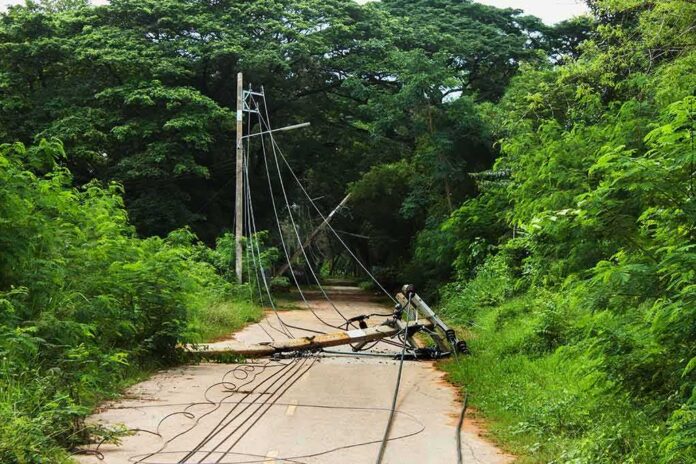
Cuba’s entire power grid went dark at once, and the island had to start from zero.
Story Snapshot
- Officials reported a total collapse of Cuba’s national grid and a nationwide blackout.
- The energy ministry said restoration protocols were activated while the cause was probed.
- State utility updates framed this as another failure in a long run of outages.
- Chronic fuel shortages and aging plants left the system on a knife’s edge.
What Happened And What Officials Confirmed
Cuba’s Ministry of Energy and Mines announced a nationwide blackout after what it called a total collapse of the national grid. The message came through the ministry’s official social channel and set the basic facts: the entire system disconnected and the country lost power. The ministry said crews began restoration protocols right away while the cause was under investigation. Wire services echoed the statement, noting the islandwide scope and the ministry’s language of a “total collapse”.
The state utility, known locally as the Electric Union, described the event as a complete disconnection of the National Electric System. That phrasing signaled not just a big outage but a full system down. Officials said teams moved to reenergize parts of the network and ramp up generating units step by step. Reports emphasized that this was not the first such event this year, and that earlier blackouts showed similar patterns in the failure and the recovery sequence.
Why The Grid Keeps Failing
Public reports tie these collapses to a simple but brutal math problem: too little fuel, too little reliable generation, and too many aging parts that break under stress. Reuters has chronicled how fuel shortages and worn plants leave Cuba’s grid with thin reserves and frequent breakdowns. When one big unit trips, the rest can tumble, and frequency control fails. At that point, operators must black-start the system, which takes time and careful load balancing.
Each collapse hits an economy already struggling to keep hospitals, food storage, and transit running. Rolling blackouts had become common even before this event, because demand outpaced dependable supply on most days. That made the grid fragile, like a tightrope walker in crosswinds. One slip, and the act ends for everyone beneath. Official updates after past failures showed restoration often starts in parts of Havana, then spreads as generators synchronize with the network.
The Blame Debate Versus The Physics
Coverage often turns into a proxy fight over causes: sanctions and fuel constraints on one side; decades of underinvestment and mismanagement on the other. Both threads appear in prior reporting, but the grid physics do not care about politics. A system with old thermal plants, scarce spare parts, and tight fuel makes outages more likely and the restarts slower. That is the throughline across these blackouts, regardless of which talking point dominates a given day’s press cycle.
BREAKING: Millions without power across Cuba as the island's electrical grid collapses again, the seventh nationwide blackout of the year.
— HIT.com (@HIT) September 19, 2026
American conservative values stress competence, maintenance, and accountability. On those terms, the facts point to a basic standard: keep critical assets ready, or face the consequences. Leaders must secure steady fuel, enforce upkeep, and plan for failure with real reserves. People need lights, medicine cold storage, and water pumps that work. When the grid collapses, the state fails its first duty to protect life and property. No slogan can paper over that reality.
What To Watch Next
Officials promised to probe the cause and keep restoring power. The key signals to watch are how fast generation returns, whether the system stays stable under evening peaks, and if the utility publishes a clear sequence of events. A credible after-action report should pinpoint which unit or line tripped first, why protection schemes could not isolate it, and what changed to prevent a repeat. Without those steps, the next hot day or fuel pinch could trigger the same cascade.
Sources:
globalbankingandfinance.com, wftv.com, reuters.com, riotimesonline.com, abcnews.com
© standardnewsdaily.com 2026. All rights reserved.