
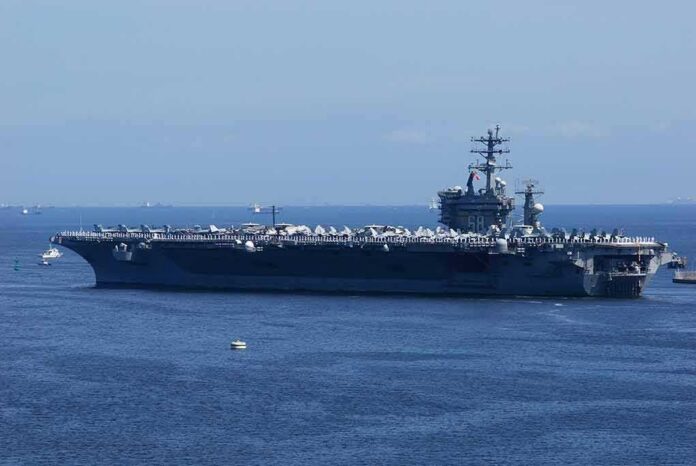
Eight suicide attempts tied to one Navy carrier strike group forced a rare, public clash over truth, care, and command responsibility.
Story Snapshot
- The Navy confirmed eight suicide attempts across the USS Abraham Lincoln strike group during deployment.
- Senator Kirsten Gillibrand pressed Acting Navy Secretary Hung Cao over the wording and accountability.
- Cao later framed them as “suicide mitigations,” citing chaplains and mental-health teams.
- One sailor went overboard and was rescued; another attempt was reportedly stopped by shipmates.
What the Navy Put in Writing, and Why It Hit Like a Siren
Acting Navy Secretary Hung Cao told Senator Kirsten Gillibrand in a written response that eight service members across the USS Abraham Lincoln carrier strike group attempted suicide during the deployment. His letter counted the carrier crew, air wing, strike-group staff, destroyer-squadron staff, escorting destroyers, and embarked aviation squadrons. Gillibrand then called for hearings with Senator Tammy Duckworth’s colleague Representative Brad Schneider, saying Congress must review conditions and the Navy’s response. The word “attempts” turned a simmer into a boil.
The Navy’s earlier public line said it had not observed an increase in suicidal ideation or attempts aboard the Lincoln itself, a claim that jarred against Cao’s eight-attempt admission across the wider strike group. That gap matters. Families hear “no increase” and think all is normal. Then they see eight attempts and wonder who is counting what, and where. Transparency is not a luxury when lives hang in the balance. Clear definitions calm rumors and focus fixes.
Inside the Clash: “Attempts” Versus “Mitigations”
Cao later described the incidents as “eight suicide mitigations,” arguing that chaplains, deployment-resiliency counselors, and mental-health specialists stepped in and helped avert tragedy. That framing highlights intervention success but does not erase the underlying danger signal. Gillibrand’s point holds: “attempts” mean people reached a crisis point, and that requires answers on prevention upstream, not only praise for rescues downstream. Both truths can stand. Leaders should count saves and also confront why so many were needed.
At least two concrete episodes stand out from broader morale chatter. A sailor reportedly went overboard in early August and was rescued, while another service member who tried to jump in March was stopped by shipmates. Cao has suggested that one overboard sailor wore a life preserver and told the captain he was not trying to die, which complicates classification. The facts show risk at the rail. The labels can wait for investigators; the duty to reduce risk cannot.
Strained People, Long Days, Narrow Doors to Care
The deployment stretched long and hard, with reports of more than 200 days of combat operations in the region, a real strain on sleep, family ties, and nerves. The ship sailed with five chaplains, a psychologist, a clinical social worker, an embedded prevention counselor, and three behavioral-health technicians, plus a facility dog, according to Navy descriptions. That is a real network, but not a cure-all for a floating city. Demand at sea spikes; privacy shrinks; stigma lurks in every tight passageway.
.@SenGillibrand (D-NY) and Navy secretary nominee Hung Cao have heated exchange about suicide attempts on USS Abraham Lincoln including one sailor who jumped overboard:
Cao: "That sailor was not trying to kill himself…"
Gillibrand: "What was he trying to do? Swim to Guam?" pic.twitter.com/ARJQf07hO3
— CSPAN (@cspan) November 17, 2026
Reports also show limits. Only the psychologist and clinical social worker are licensed clinicians, and sailors described wait times of weeks for non-urgent care during the deployment. A deployed resiliency counselor reportedly left mid-cruise and had not been replaced by a later port call, cutting capacity when steady hands were needed most. The Navy has said it added counselors and chaplains this year, a welcome shift that should become policy, not patchwork. Common sense says surge help to where risk surges.
What Accountability Should Look Like Now
Congress should secure the full incident summary behind the eight attempts—dates, locations, unit assignments, and clinical classifications—scrubbed of identities to protect privacy. The Navy should reconcile its ship-level “no increase” statement with the strike-group total, using plain terms that match Department of Defense suicide event definitions. Families deserve consistency. Sailors deserve resources sized to the headcount and the mission tempo. Sunlight and standards align with American conservative values: tell the truth, fix what is broken, and back the people doing the hard work.
Why This Fight Matters Beyond One Carrier
The armed forces track suicide as a force-wide problem, not a series of isolated tragedies. The Department of Defense Suicide Event Report exists for this reason: common data, common language, better prevention across services. One cluster cannot prove causation, but it should trigger a hard look at crew load, watch bills, port calls, and medical access. A carrier strike group is a city at sea. Cities plan for mental health. Ships must do the same, with depth on the bench when the seas get rough.
Sources:
youtube.com, gillibrand.senate.gov, bbc.com, edition.cnn.com, washingtonsun.com, washingtonexaminer.com, legion.org, ms.now, dspo.mil
© standardnewsdaily.com 2026. All rights reserved.