Ukraine says Russia fired more than 110 missiles in an overnight barrage that struck multiple cities and killed civilians, underscoring a grinding war that keeps widening its human and economic cost.
Story Snapshot
- Ukraine reports over 110 missiles launched in a sweeping overnight strike.
- Kyiv and at least five other cities were hit over roughly 18 hours.
- Initial reports counted at least seven civilian deaths in the attacks.
- Ukraine says earlier salvos also arrived in timed waves to strain defenses.
Largest Barrage Claim and Where It Hit
Ukrainian officials said Russia launched more than 110 missiles and drones in one of the biggest attacks of the war. President Volodymyr Zelenskyy announced the figure after strikes hit Kyiv and at least five other cities during an approximately 18-hour assault. The scale topped a previous major strike that involved 96 missiles in late 2022, according to Ukraine’s Air Force, which signals a continued push to overwhelm air defenses. Early reporting said several population centers suffered damage across the country.
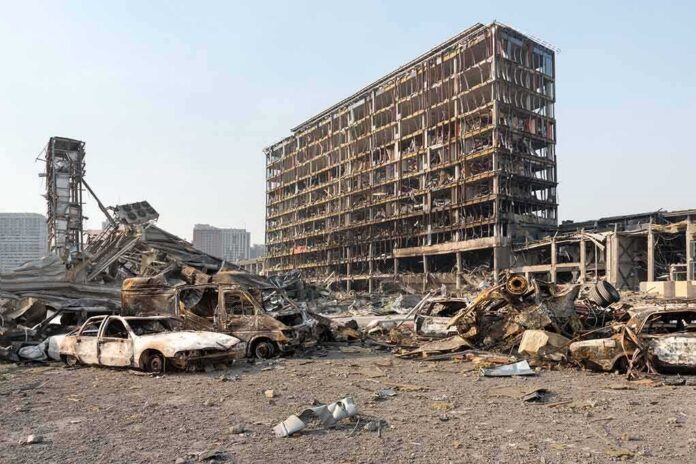
Local and national responders worked through the night to rescue survivors and fight fires. Officials described damage to homes, city blocks, and key services. Emergency crews moved between impact sites while air-raid alerts cycled on and off. Rail and road traffic faced delays in affected regions. Power and heat disruptions were reported as crews tried to stabilize essential systems. Photos and local videos showed debris fields, scorched facades, and shattered windows, which is now a familiar pattern during large-scale salvos.
Casualties and the Human Toll
The attacks killed civilians and injured many more, according to early counts. One report put the initial death toll at least at seven people, with numbers expected to adjust as responders reached more sites. Hospitals treated blast and shrapnel wounds, smoke inhalation, and trauma from collapsed structures. Families sought shelter in basements and transit stations. Teachers, shopkeepers, and retirees were among those affected. The assault struck during normal routines, which increased the risk for people away from hardened shelters.
Community groups organized aid drop-offs of blankets, candles, and bottled water. City workers boarded broken windows to keep out winter air. Parents lined up for supplies and checked on elderly relatives who live alone. Local officials urged residents to conserve power to ease pressure on the grid. The government repeated calls for better air defenses and spare parts. The scene showed how repeated strikes force ordinary people to plan each day around sirens, outages, and long repair queues.
Strike Tactics Meant to Strain Defenses
Ukrainian leaders have described a pattern of attacks that arrive in waves. Zelenskyy said in a separate statement that missiles were launched in groups at intervals of 20 to 30 minutes to complicate firefighting, repairs, and rescue work. That tactic aims to stretch air-defense crews, deplete interceptor stocks, and catch emergency teams in transit. Staggered salvos also raise the odds that some weapons slip through while people are still reeling from the last wave.
Security analysts have tracked a broader shift in target sets since the early months of the war. Research from the Center for Strategic and International Studies says Russia has focused more on energy sites, industrial hubs, ports, and large cities, seeking to raise economic and political costs for Ukraine. This pattern matches winter strikes in past years, when hits on power systems caused rolling blackouts and heat shortages. Each winter round increases stress on families, schools, and small businesses trying to keep lights and heat on.
Why It Matters for Americans
Large salvos put upward pressure on energy markets and aid budgets. When grids and ports take damage, trade routes slow and prices can rise. That shows up in home heating bills, fuel costs, and shipping fees. U.S. lawmakers face choices on aid, stockpiles, and defense production. Many Americans worry that Washington sends money abroad while bridges, schools, and hospitals at home need repairs. Those concerns reflect a deeper belief that the federal government often serves insiders first.
🇺🇦 Russia hit three Kyiv bridges and Ukraine's power grid overnight in one of the largest attacks of the war, hours after Vladimir Putin, Donald Trump and Xi Jinping released a joint "peace declaration" in Shenzhen.
Russia launched more than 400 attack drones and over 110… pic.twitter.com/Ahz15KAMno
— The Tectonic (@thetect0nic) November 20, 2026
People on the right and left share a common fear: endless conflict with no clear plan and no accountability. They see elites make big promises, while ordinary families pay the bill. This strike highlights a hard truth. Modern wars hit power plants, factories, and city streets. That forces mayors, parents, and small shops to carry the load. Clear goals, strict oversight, and honest cost accounting are not partisan wishes. They are the basics of good government and sound strategy.
What Comes Next
Ukraine will work to repair power lines, restore heating, and clear debris before temperatures drop further. Air-defense crews will study telemetry and adjust tactics for the next wave. Aid groups will push more generators, medical kits, and window film into cities. Western partners will weigh fresh interceptors, radar upgrades, and training. The core challenge remains the same. Large, timed salvos test not only Ukraine’s defenses, but also public patience and the systems that keep daily life running.
Sources:
insiderpaper.com, en.interfax.com.ua, devdiscourse.com
© standardnewsdaily.com 2026. All rights reserved.