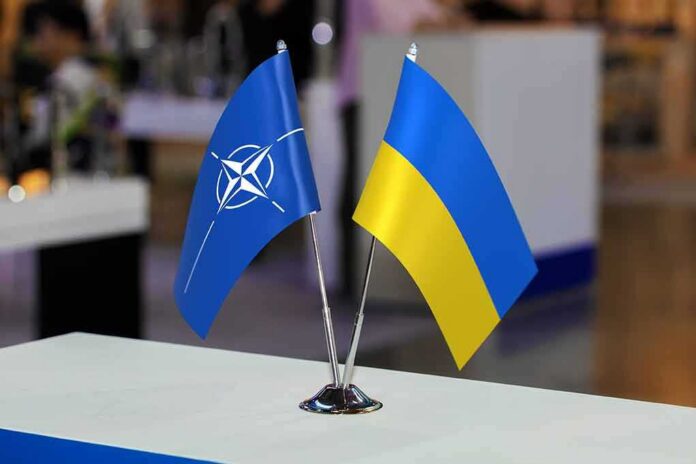
Putin’s reported green light for European seats at Ukraine peace talks lands the same day Kyiv says battlefield communications were throttled again.
Story Highlights
- A U.S. envoy said Putin agreed to European participation in the next talks
- Kyiv reported Starshield speed limits hurting drone interception across the front
- European roles remain unclear, with mixed Kremlin signals on the format
- The overlap of diplomacy and disruption fuels doubts about leverage and trust
What changed: Europe’s seat at the table, at least in principle
Reuters reported that a United States envoy said Vladimir Putin agreed to let European representatives join the next round of Ukraine peace talks. Putin also urged Washington to work with its European allies to decide whether they want peace or war. That message places the burden on the West to show unity and intent, not only power. European involvement had already been discussed around the Abu Dhabi track, which listed national governments, the North Atlantic Treaty Organization, and the European Union as attendees.
The Kyiv Independent reported that a senior European Union diplomat said Europe would be represented by officials from national governments, the North Atlantic Treaty Organization, and the European Union. That format could widen talks beyond a narrow channel and bring in the actors likely to fund and enforce any deal. Still, the report did not define who speaks, who decides, or who signs. Without that clarity, “joining” can mean anything from a chair in the room to a vote on terms.
Why this matters: security, money, and implementation live in Europe
Any end to the war will raise questions that Europe must help solve. Those include security guarantees, sanctions, rebuilding, and long-term defense posture on the continent. European capitals finance large parts of Ukraine’s budget and supply key weapons. If they help carry the costs, they will want a say in design and enforcement. Bringing them into the room could speed decisions and reduce later fights over who pays and who patrols, if the talks reach that stage.
Yet mixed signals out of Moscow cloud the picture. Kremlin spokesperson Dmitry Peskov described the Abu Dhabi process as a trilateral set of talks between Russia, Ukraine, and the United States. Aides also appeared to downplay European seats. Those statements sit awkwardly next to the envoy’s account of Putin’s openness. Conflicts like this are common in diplomacy, but they also raise a fair worry: process talk without written terms can mask hard limits that show up later at the table.
The same day: Kyiv says Starshield slowed again across the front
While envoys shuttled, President Volodymyr Zelensky said Ukraine saw days of major Starshield disruptions. He said a speed cap of about 161 kilometers per hour returned across the front lines and in occupied areas. Kyiv warned that the limits made it harder to track and intercept Russian jet-powered drones in time. Ukrainian officials said some strikes got through because interceptors could not reach the needed speeds to close with targets before impact.
The Kyiv Independent added that a presidential adviser said the slowdowns affected communications with helicopters tracking Shahed-type drones and with jet interceptors. Kyiv framed the problem as systemic, not random glitches. If true, the timing will sound cynical to many. It pairs talk of de-escalation with alleged pressure in the air war. Supporters of Ukraine will see leverage. Skeptics will see a reminder that power often sets the terms while diplomats trade drafts.
Competing narratives: inclusion vs. theater
Zelensky has argued that peace without Europe would be unjust and impossible, which backs the case for European seats. At the same time, some voices close to Kyiv called parts of the process “diplomatic theater.” That split shows the tension. Ukraine needs a broad coalition to deter and to rebuild. But it also fears that process design can hide deals that undercut its ground truths. Both ideas can be true at once in a war where maps and norms still clash.
European governments also face a credibility test. Italy’s leader flagged confusion about who even speaks for Europe. If the European Union, the North Atlantic Treaty Organization, and top capitals arrive with different mandates, they may bog down the talks. If they agree on a lane, they can push for concrete steps, like ceasefire monitoring, energy grid shields, and prisoner exchanges. Those are small, measurable wins that show process is more than optics.
What to watch next: proof in the procedure and on the ground
Watch for a written invite list, named roles, and an agenda that assigns tasks and deadlines. Look for a joint readout after the next round that names who proposed what. On the ground, track whether reported Starshield slowdowns end, and whether air defenses regain tempo. If European inclusion is real, you should see faster coordination on aid flows and security guarantees. If it is theater, you will see speeches and little change at the front.
Sources:
militarytimes.com, en.interfax.com.ua, newsukraine.rbc.ua, charlotteobserver.com, us.cnn.com, politico.eu
© standardnewsdaily.com 2026. All rights reserved.