
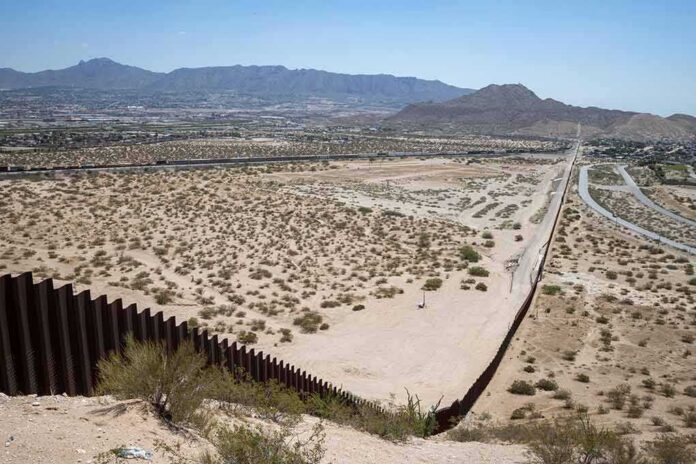
At a time when New Mexico ranchers watch their wells run low, federal border wall crews have been drilling their own — without state permits — until sudden orders came down to stop.
Story Snapshot
- Customs and Border Protection told border wall contractors in New Mexico to stop drilling new groundwater wells after rancher backlash.
- New Mexico’s state engineer says at least six to eight border wall wells were drilled without required state permits during a severe drought.
- Federal officials claimed immunity from state groundwater law on federal land, putting state and Washington on a collision course.
- Local ranchers fear high-volume pumping for concrete and roads could “pump us dry” and threaten their livelihoods.
Border Wall Water Fight Erupts In Drought-Stricken New Mexico
U.S. Customs and Border Protection (CBP) has ordered contractors building President Trump’s border wall in New Mexico to stop drilling new groundwater wells, after weeks of anger from ranchers and warnings from state officials. The wells were used to supply water for concrete, road building, and dust control along the southern border. This clash comes during a punishing drought in New Mexico, where many rural families already struggle to keep their own wells producing.
The New Mexico Office of the State Engineer, which regulates groundwater, says it has identified at least six wells under development for border wall work that had no state permits, and later reported eight wells along the border that were drilled without required permission. Staff who inspected two wells in July found they were pumping about 200 gallons per minute, suggesting heavy, ongoing use. State officials warn that without permits or reporting, they cannot track how much water is being taken or how it affects nearby ranch and household wells.
Federal Immunity Claim Versus State Water Law
The dispute turns on a basic question: does federal land status let Washington ignore state groundwater rules when it wants to move fast on a national project? CBP’s April letter to New Mexico argued the federal government is “immune” from the state’s permit requirement for wells drilled on federal property. The wells sit within the 60-foot Roosevelt Reservation strip that runs along the border, a federal tract controlled by the U.S. government.
New Mexico’s position is blunt and simple. Deputy state engineer Nat Chakeres says that in New Mexico, and across the West, all non-tribal wells need state permits, no matter who owns the land. He also notes that CBP applied for and received groundwater permits for border wall work during Trump’s first term, showing the agency knows how to follow the rules when it chooses to. For now, there is no court ruling settling whether CBP’s immunity claim can override state law, so the legal question hangs over the fight.
Ranchers See Border Wall Wells As “Stealing Their Water”
Ranchers along the border say the unpermitted wells confirm their worst fears about how big projects treat rural communities. One Luna County rancher, Russell Johnson, says CBP contractors talked about wells aiming for “300-plus gallons a minute” and warned “it’s going to pump us dry.” He and others argue that when federal crews drill high-volume wells during a drought, without permits, it looks like the government is putting concrete and steel ahead of the people who live on the land.
🔴 Trump border wall crews in New Mexico ordered to halt well drilling
Customs and Border Protection instructed contractors to stop drilling new wells after ranchers reported unmonitored groundwater extraction threatened livestock during severe drought.
Border wall construction… pic.twitter.com/fitt0b7Uj4— NewsTongue (@NewsTongueX) August 4, 2026
This anger taps into a wider frustration shared by many conservatives and liberals. For border security supporters, the story feeds a sense that federal agencies and contractors cut corners and waste resources, even on projects they back. For critics of the wall, it reinforces a belief that Washington pushes ahead with America First-style construction while ignoring local families and basic environmental safeguards. Both sides see a federal government quick to claim special powers, slow to protect ordinary citizens.
What Comes Next: Cooperation Or Courtroom Battle?
After ordering a halt to new well drilling, CBP says it wants to work with New Mexico and the U.S. Department of Agriculture on a groundwater management plan. The agency now publicly states that its goal is to minimize water use and to collaborate with local landowners so construction does not harm their water needs. This is a sharp change from the earlier immunity letter, and suggests the public pressure from ranchers and state officials is forcing some step back.
New Mexico officials have hinted they may move to shut down companies that drilled without permits if cooperation fails. That could bring the conflict into court and test how far federal agencies can go in bypassing state water law during major projects. For people watching from across the country, the New Mexico wells story is more than a local water fight. It is another sign of a federal system where agencies claim broad powers, rules bend under pressure, and rural communities wonder who, if anyone, is really on their side.
Sources:
washingtontimes.com, iowapublicradio.org, wbur.org, theguardian.com, facebook.com
© standardnewsdaily.com 2026. All rights reserved.