
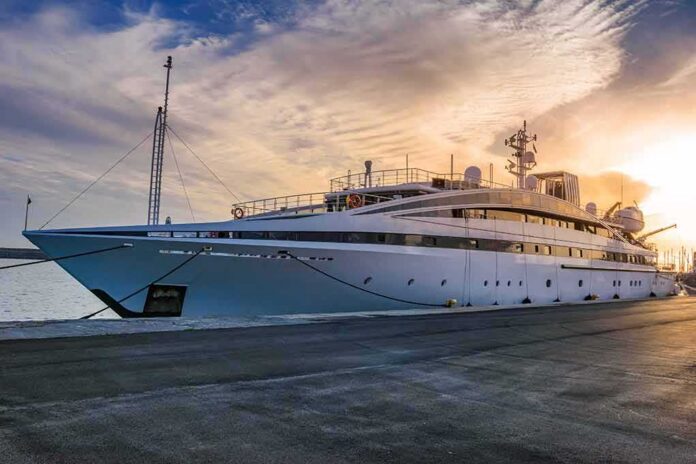
A fully loaded tanker slammed into a docked river cruise ship in New Orleans, and now the Port has asked a federal court to take control of the tanker to secure evidence and recover damages.
Story Snapshot
- The Port says the tanker Atlantic Asphalt hit the docked American Heritage on November 13, 2026.
- Reports describe a sharp turn to starboard before impact; officials cited a likely steering issue.
- The Port filed a federal suit seeking control of the tanker and at least $1 million for damage.
- The National Transportation Safety Board (NTSB) opened a formal investigation.
What happened at the New Orleans riverfront
On November 13, 2026, near the Thalia Street Terminal, the tank ship Atlantic Asphalt struck the docked passenger vessel American Heritage at about 12:30 p.m., according to published reports and a Port filing. The passenger vessel took on water and capsized. Emergency crews moved fast and accounted for everyone on board. Reports said more than 30 people went to hospitals for treatment, and there were no confirmed fatalities in initial updates.
Witness accounts and local coverage said the tanker made a hard turn to starboard before the crash, which aligns with early comments about a steering problem from a United States Coast Guard official reported by media outlets. The Port of New Orleans identified the tanker and the passenger vessel in a federal lawsuit filed the same day. The suit describes the incident, claims property damage at the terminal, and sets out a path to secure the vessel and related evidence.
Why the Port went to federal court
The Port asked the United States District Court for the Eastern District of Louisiana to place the tanker under federal control. Reporting states a judge issued process allowing authorities to hold the vessel to preserve evidence and satisfy potential damages claims. The Port alleged negligence and rule violations by the tanker’s owner and manager, and it seeks at least $1 million for terminal repairs, with more losses possible as assessments continue. These figures come from the complaint summaries and are not final totals.
This type of maritime case follows a well-known path. A direct impact leads to fast legal action to secure the vessel, logs, and data. That helps investigators and courts sort cause and responsibility. Here, the Port also aims to document losses from damage and any disruption to river traffic and port operations. Those claims often include repairs, cleanup, and business interruption, which can grow as inspections advance.
What investigators will look for next
The National Transportation Safety Board opened a case on the collision in New Orleans. The agency listed the event as a collision between the tank ship Atlantic Asphalt and the passenger vessel American Heritage on November 13, 2026. Investigators typically gather voyage data, bridge audio, helm commands, and maintenance records. They also analyze current, wind, traffic, and radar tracks. Those steps test whether the reported steering issue came from a mechanical fault, crew action, or both.
Published reports stressed that the steering problem remains an early assessment and that the official cause is still under review. Investigators will seek engine and steering gear records, rudder-angle history, and alarms. They will also examine crew training, watch schedules, and company safety practices. That is common in marine cases where human factors and machinery can interact to create a fast-moving hazard near a busy berth.
Why this matters beyond one riverfront crash
The crash raises core questions about safety, accountability, and public risk on a vital trade artery. The Mississippi River moves fuel, grain, and goods that feed local jobs and national supply chains. A single wrong turn near a passenger berth can put hundreds of people at risk and shut down a key terminal. When government and private operators act quickly to secure evidence, they protect the public interest and help prevent repeat failures.
🚨WATCH: NTSB Member John DeLeeuw says investigators have recovered the voyage data recorder from the tanker Atlantic Asphalt and examined the riverboat "that is on its side" after Friday's collision in New Orleans, with interviews scheduled over the next two days. pic.twitter.com/erlY9dfKou
— Off The Press (@OffThePress1) November 14, 2026
The Port’s lawsuit also reflects a broader concern that many readers share: rules must work the same for everyone, from global shipowners to local passengers. Quick federal control of the vessel aims to keep proof intact and stop blame games from burying the truth. That approach, paired with an independent safety probe, gives the best chance to learn what went wrong and to fix it so families, workers, and travelers stay safe on America’s rivers.
Sources:
washingtontimes.com, upi.com, ntsb.gov, atlantanewsfirst.com, abcnews.com, nola.com, wfmz.com, afp.com, wbrz.com
© standardnewsdaily.com 2026. All rights reserved.