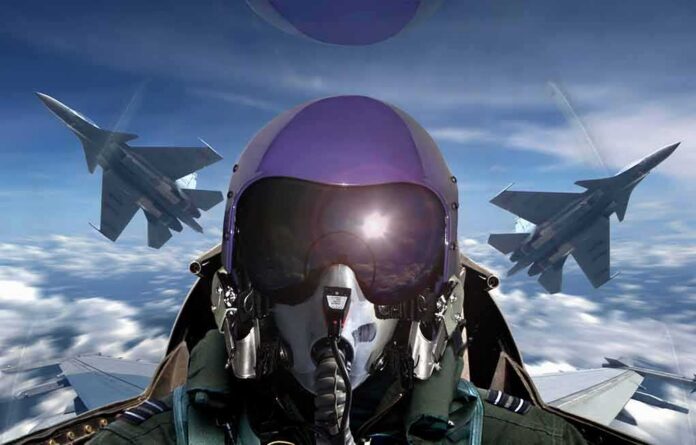
John Alvarez climbed back into a military helicopter 361 days after losing his leg in a crash, because the system said he could and he proved he should.
Story Snapshot
- Alvarez returned to military flying on Sept. 5, 1997, less than a year after the crash.
- A flight waiver, rehab, and re-qualification cleared him for the cockpit.
- The military’s waiver process allows case-by-case returns when safety standards are met.
- His comeback shows grit matched to a careful, rule-bound path back to flight.
A one-year comeback measured in grit, paperwork, and flight checks
On Sept. 19, 1996, a counter-drug mission in Ecuador turned deadly. The helicopter crashed into a river near the Colombian border. The Ecuadorian pilot died on impact. Then-Navy pilot John Alvarez survived with severe injuries and later lost his lower left leg. He went from cockpit to hospital to rehab, then to a long trail of medical tests and flight checks. On Sept. 5, 1997, he strapped in again and flew a military helicopter. That is the durable fact at the center of this story.
Doctors, flight surgeons, and commanders did not wave him through. They used a tool built for rare, high-skill cases: an aeromedical waiver. It exists because aviation standards are strict by design, but the mission cannot afford blanket rules that ignore individual skill and safety performance. A waiver lets a qualified pilot fly when a condition would otherwise disqualify him, if risk can be controlled and the mission demands it. That is the path Alvarez walked, leg or no leg.
How a pilot with an amputation earns back a seat
The military does not hand out these waivers like souvenirs. The process requires exams, documentation, and sign-offs from medical and operational leaders. An Air Force manual explains that when a medical exam finds a disqualifying condition, a waiver may still be allowed after review. The authority looks at fitness for duty, aircraft controls, emergency tasks, and risk to crew and mission. That is not guesswork; it is a checklist with teeth and a renewal clock.
Alvarez had to show he could manipulate the controls with a prosthesis, handle emergency procedures, and pass a re-qualification flight. Air Force Special Operations Command later described his steps clearly: he received an athletic prosthesis, gained approval to return, and completed his first re-qualifying flight about a year after the crash. The message was simple and strict: prove it in the aircraft, or do not fly at all.
Why this return matters for pilots, commanders, and taxpayers
One pilot’s comeback can feel like a private triumph. It is more than that. The waiver system protects safety while preserving rare experience. Combat aviation demands judgment and skill that take years and millions of dollars to build. When a seasoned pilot still meets the standard, the right call is to keep that talent in the cockpit. That aligns with common sense and with conservative values: keep what works, set clear rules, and make the individual earn it, not receive it.
A Helicopter Crash Took His Leg. 361 Days Later, John Alvarez Was Back Flying Military Aircraft. https://t.co/Dg9DIQ7rBn
— Deen Coldwell III (@deen_iii) October 8, 2026
Some will ask if this risks mission safety. The better question is who decides and on what basis. The answer is a chain of medical and operational authorities guided by policy and data. That chain measured Alvarez against the mission and the aircraft, not against sentiment. He met the bar. He was grounded after the crash, evaluated, granted a flight waiver, and found capable of safe flight again. He then flew on Sept. 5, 1997. Those are checkable facts, not a feel-good gloss.
The larger pattern: rigid standards, narrow doors, real second chances
Military aviation builds guardrails, then adds a narrow door for exceptions. That door is there because not all bodies, injuries, or recoveries are the same. The process, not the emotion, decides. Alvarez’s return fits that pattern. He was unusual in outcome but not in process. The system asked, can he fly, can he fight, and does he make the team stronger without adding undue risk? The evidence said yes, and the cockpit door opened one year later.
Sources:
military.com, hurlburt.af.mil, dutystation.ai, afsoc.af.mil
© standardnewsdaily.com 2026. All rights reserved.