
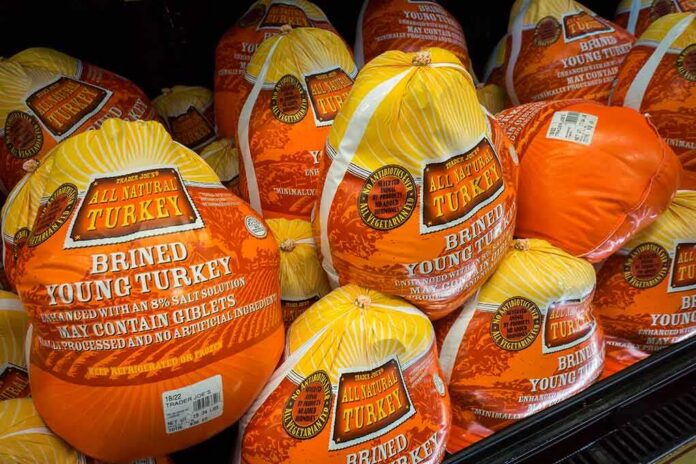
The fastest way to ruin Thanksgiving is to rinse your raw turkey in the sink.
Story Snapshot
- United States Department of Agriculture says do not wash raw turkey; it spreads bacteria by splash.
- Cook turkey to 165 degrees Fahrenheit in the thigh, wing, and breast to make it safe.
- Keep raw turkey and its juices away from ready-to-eat foods and clean all surfaces.
- Most home cooks still wash poultry, even though it raises the risk of cross-contamination.
Why rinsing turkey makes your kitchen less safe
United States Department of Agriculture food safety experts say washing raw poultry does not remove germs. Water pressure and droplets can blast bacteria from the bird onto sinks, counters, utensils, and nearby food. That is cross-contamination, and it is a top driver of foodborne illness in home kitchens. United States Department of Agriculture guidance is blunt: skip the rinse and go straight to seasoning and cooking. Paper towels do not fix splash either. Heat, not a faucet, solves the bacteria problem.
United States Department of Agriculture and its Food Safety and Inspection Service recommend a simple plan that works: clean, separate, cook, and chill. Wash hands with soap and warm water for 20 seconds before and after handling raw turkey. Use a separate cutting board and tools for raw meat. Keep raw juices far from salads, fruit, desserts, or anything served cold. Sanitize counters and the sink after contact with raw turkey and its packaging. These are the boring steps that prevent holiday stomach bugs.
The only proof your turkey is safe: 165 degrees Fahrenheit
Cook the turkey until the thickest part of the breast, the innermost thigh, and the innermost wing each reach 165 degrees Fahrenheit. Use a food thermometer and check all three spots. Do not guess by color, clear juices, or time alone. Ovens vary. Stuffing inside the bird must hit 165 degrees too, or cook it in a separate dish. United States Department of Agriculture calls 165 degrees the safe minimum to kill common bacteria linked to poultry.
The agency’s holiday playbook adds a few guardrails. Thaw a frozen turkey in the refrigerator, cold water, or a microwave, not on the counter. Keep raw turkey on the lowest shelf in a pan to catch drips. Do not reuse marinades that touched raw meat unless you boil them first. Rest the bird after cooking to keep juices in the meat. Then carve with clean hands and tools on a clean board. These habits block germs at every step.
Most people still rinse; here is how to break the habit
Old kitchen lore says washing makes meat cleaner or less slimy. Surveys show most home cooks still rinse poultry. Many do not know experts call it unsafe. Public health teams have demonstrated that washing sends bacteria across work areas, where it can land on foods that will not be cooked again. If you want a cleaner bird, pat it dry with paper towels, toss them, and wash your hands. Dry skin also helps browning in the oven. Clean feel, no splash risk.
Ready for turkey day? 🦃 Make sure your Thanksgiving is memorable for all the right reasons! As you prepare to gather around the table, remember to follow these simple food safety tips to help keep everyone safe. For more helpful advice, visit https://t.co/WxELZfHTO9 pic.twitter.com/qaMbLdzfQQ
— Siouxland Health Dpt (@SiouxlandHealth) November 22, 2026
United States Department of Agriculture messages have shifted behavior when people see the why and the how. Households that get clear, simple tips stop washing more often and contaminate less. The goal is not fear. The goal is control. Safe food handling respects limits and leans on common sense: keep raw away from ready-to-eat, clean what gets dirty, and cook hot enough to finish the job. That aligns with personal responsibility in the kitchen and protects guests without drama.
Thanksgiving done right: a simple, safe game plan
Set up your station before the turkey leaves the wrapper. Place a lined sheet pan to catch drips. Stage your thermometer, foil, paper towels, and a trash bag within reach. Season the bird on the pan. Slide it into a preheated oven. Keep salads and desserts prepped far from the raw zone. After the turkey goes in, scrub the sink and counters with hot, soapy water, then sanitize. When the thermometer reads 165 degrees in all three spots, serve with confidence.
Sources:
washingtontimes.com, fsis.usda.gov, usda.gov, pmc.ncbi.nlm.nih.gov, ars.usda.gov
© standardnewsdaily.com 2026. All rights reserved.