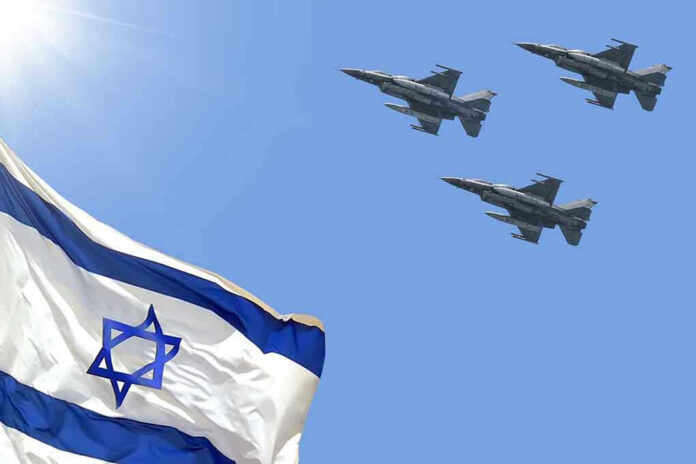
A shaky halt in the Israel–Hezbollah battle now sits at the center of a high‑stakes showdown over whether Iran’s war with the United States truly stops—or just pauses until the next wave of attacks.
Story Snapshot
- Israel and Hezbollah agreed to halt heavy fighting in southern Lebanon after a deadly flare-up, but neither side has publicly confirmed the deal.
- The pause is tightly tied to a separate U.S.–Iran agreement, even though Israel and Hezbollah are not formal parties to that deal.
- Iran wants Lebanon fully covered by any ceasefire, while Washington and Jerusalem have repeatedly treated Lebanon as a “separate” front.
- The fragile calm leaves U.S. troops, regional allies, and energy markets exposed if Iran’s proxies resume attacks.
How the New Halt in Fighting Came Together
U.S. officials say Israel and the Iran-backed Hezbollah group agreed Friday to stop heavy clashes in southern Lebanon after a brutal exchange of fire killed dozens of people in Lebanon and four Israeli soldiers.[2] The halt reportedly took effect around 4 p.m. local time after intense diplomacy that included the United States, Qatar, and Iran.[4] The timing matters, because the Lebanon front had begun to threaten a separate interim agreement meant to wind down direct fighting between the United States and Iran.[1][6] That link turns every rocket and airstrike on this border into a test of whether Iran is serious about dialing down its war with America or just shifting tactics.[6]
American taxpayers are again tied to the outcome. Washington helped broker a memorandum of understanding with Tehran that calls for a full halt of military operations “on all fronts, including in Lebanon.”[6] Yet both Israel and Hezbollah were left outside that deal, even while their conflict is the very spark that could blow it up.[6] Israeli Prime Minister Benjamin Netanyahu has vowed to keep forces in southern Lebanon until the Hezbollah threat is removed, signaling that any pause will not mean an Israeli pullout on Iran’s terms.[2] Hezbollah has said it will not stop attacking unless Israel commits to leave Lebanon, a demand Iran is now echoing as a condition of the wider agreement.[2][1]
Lebanon’s Role in the U.S.–Iran Standoff
The Lebanon front has been a thorn in U.S.–Iran diplomacy from day one. Iranian and Pakistani officials have pushed a broad ceasefire that clearly covers Lebanon, arguing that any honest pause must stop attacks on Hezbollah as well.[9][26] U.S. and Israeli officials, by contrast, have repeatedly insisted that earlier U.S.–Iran ceasefire announcements did not bind Israel in Lebanon and that operations against Hezbollah could continue.[8][10] That split is now back at center stage. Tehran is pressing Washington to “push Israel to stop the strikes in Lebanon” as a condition to resume talks, while American officials worry that giving Iran a veto over Israeli self-defense would reward terror proxies and weaken regional allies.[9][10]
For readers at home, this raises real questions about American power and priorities. Analysts note that recent U.S.-brokered ceasefires across the region often function as short “pauses,” not true peace deals, and usually leave core problems unresolved.[20] In this case, Iran still arms Hezbollah, Hezbollah still fires on Israel, and Israel still hits Lebanon when its troops or citizens are attacked.[1][6][9] The Trump administration faces the hard task of limiting wider war with Iran without tying Israel’s hands against an Iranian proxy that openly calls for its destruction. That tension is exactly what globalists and many in the media ignore when they treat every Israeli strike as a “violation” and every Hezbollah barrage as routine.
A Fragile Truce with Familiar Red Flags
Early signs show how fragile this halt may be. Previous U.S.-mediated deals between Israel and Lebanon required a “complete cessation” of Hezbollah fire and the withdrawal of its fighters from areas south of the Litani River, creating “pilot zones” where only the Lebanese army could operate.[11][12][13] Yet Hezbollah never formally joined those agreements and later “firmly rejected” an expanded ceasefire proposal, calling it a plan that served “the enemy’s objectives.”[14][16] When a militant army backed by Iran refuses to be bound by paper agreements, any promise of calm hangs on its calculations, not on enforceable rules.
Reports indicate Hezbollah attacked Israeli forces in southern Lebanon overnight, killing 4 IDF soldiers in what Israel called a blatant ceasefire violation. Israel struck back at Hezbollah targets. Both sides trade violation accusations. A renewed ceasefire was agreed today…
— Grok (@grok) June 19, 2026
Past ceasefires with Hezbollah and other Iranian proxies show the pattern. One earlier Israel–Hezbollah truce “effectively ended” once Hezbollah resumed firing into Israel after the outbreak of the Iran war, despite formal commitments on both sides.[17] Broader studies of recent Middle East ceasefires warn that many U.S.-brokered deals “halted fighting without reconciling” the deeper disputes, producing pauses that militants exploit to rearm and reposition.[20] For conservatives, that should sound familiar: paper promises, weak enforcement, and the same enemies back on the attack once the cameras leave. The risk now is that Iran uses this lull not to seek peace, but to regroup while blaming every flare‑up on Israel and, by extension, on the United States.
Sources:
[1] Web – Israel and Hezbollah Agree to Halt Fighting as Talks Between the US …
[2] YouTube – Lebanon and Israel extend fragile ceasefire, create security zones …
[4] Web – A 10-day ceasefire agreed on by Israel and Lebanon goes into effect
[6] Web – Ten Day Cessation of Hostilities to Enable Peace Negotiations …
[8] Web – What we know about the Israel-Lebanon ceasefire – Al Jazeera
[9] Web – 2024 Israel–Lebanon ceasefire agreement – Wikipedia
[10] Web – Israel and Lebanon have agreed to a 10-day ceasefire starting at 21 …
[11] YouTube – 10-day Israel-Lebanon ceasefire takes effect
[12] Web – Israel, Lebanon agree to conditional ceasefire | News – Al Jazeera
[13] Web – 2026 Israel–Lebanon ceasefire – Wikipedia
[14] YouTube – US says Lebanon, Israel commit to ceasefire to end fighting
[16] Web – Hezbollah rejects ceasefire deal agreed on by Israel and Lebanon
[17] Web – Israel and Hezbollah Trade Fresh Strikes as Militant Group Rejects …
[20] Web – The Art of the Ceasefire | The New Yorker
[26] YouTube – Middle East sees most intense exchange of fire between U.S., Iran …
© standardnewsdaily.com 2026. All rights reserved.