After Iran’s drone hit a cargo ship, U.S. forces struck back hard and on camera—CENTCOM just released the proof.
Story Snapshot
- U.S. Central Command released video of strikes in Iran after a drone attack on a cargo ship [4].
- Targets included missile and drone storage and coastal radar sites, according to officials [2].
- President Trump called Iran’s drone attack a violation of a ceasefire, justifying the response [3].
- Iran disputes key facts and claims sovereignty over the Strait of Hormuz, fueling tensions [10].
What CENTCOM Says The Video Shows
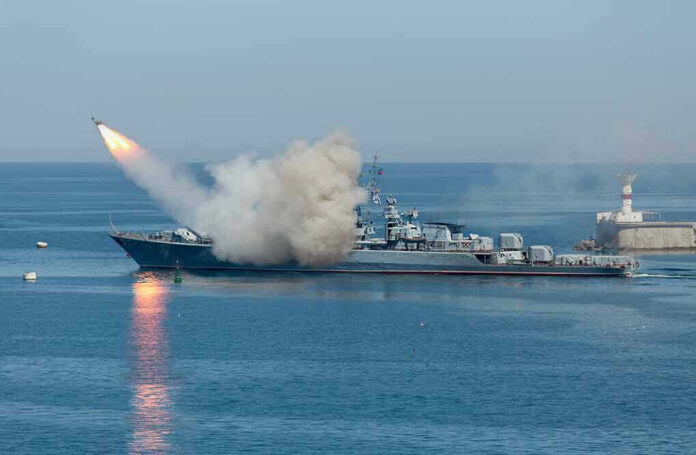
United States Central Command released black-and-white strike footage and said it shows U.S. forces hitting Iranian military sites. The release followed a drone attack on a Singapore-flagged cargo ship in the Strait of Hormuz. Central Command identified the targets as missile and drone storage and coastal radar locations tied to Iran’s military network [2]. Associated Press and other outlets reported the video’s release and focus on the retaliatory nature of the operation after the ship attack [5].
Officials described the action as a measured response to protect shipping lanes against further drone and missile threats. Early reports placed some targets along the Strait and near Qeshm Island, a strategic area used by Iranian forces [3]. Central Command’s media gallery listed the video and press materials to frame the strike as defense of maritime commerce and a direct answer to the cargo ship incident [2]. The administration emphasized restoring deterrence while seeking to avoid a wider war.
Why The Targets Mattered For Deterrence
Central Command highlighted missile and drone storage sites and coastal radar because those enable attacks on ships and give Iran eyes on the waterway [2]. Hitting these nodes can disrupt planning cycles, delay launches, and blind spotters. U.S. officials said the chosen sites supported recent hostile actions and posed risks to free movement in the strait [3]. Prior briefings from commanders stressed a focus on degrading Iran’s ability to threaten ships so traffic can move with less fear of sudden strikes [14].
Analysts warned that any action in the Strait of Hormuz touches energy markets. The timing, location, and public release of video adds pressure on Iran to think twice before targeting commercial vessels. But it can also raise talk of escalation in the region. Mainstream coverage often paints such moves as a challenge to fragile understandings in place since the spring battles, even when the U.S. frames them as defensive and proportional [5]. That split in framing shapes public debate at home and abroad.
Competing Claims And Evidence Gaps
Iran’s parliamentary National Security Commission leader asserted Tehran’s control over the strait and warned Washington not to misread that control as escalation. That message counters the U.S. claim of justified defense after an attack on a commercial vessel [10]. Iranian officials have at times denied related drone activity within narrow time windows, which collides with U.S. accounts of launches and tracking. These disputes keep facts contested and fuel outside skepticism of both sides’ narratives.
The Central Command video helps show that U.S. weapons hit something, but its quality is low, and it cannot by itself prove each target’s nature. Critics call the imagery “blurry,” which limits independent review. That leaves the public leaning on official descriptions of the aim points and effects. Third-party satellite pictures, ship logs, or crew video from the struck cargo carrier would provide stronger outside proof of the attack’s timeline and origin. Until then, arguments over blame will continue [8].
Trump’s Rationale And The Ceasefire Question
President Trump labeled the drone strike on the cargo ship a violation of a ceasefire deal and backed the military response as necessary and proportionate [3]. That message lines up with Central Command’s focus on restoring deterrence and shielding global trade lanes. Some officials have also described recent responses as proportional actions tied to specific incidents, not a return to broad war footing. The White House aims to deter more attacks while keeping channels for diplomacy open.
*U.S. STRIKES IRAN MISSILE, DRONE SITES AFTER ATTACK ON COMMERCIAL VESSEL IN STRAIT OF HORMUZ: CENTCOM: U S CENTRAL COMMAND
*IRAN ATTACKED SINGAPORE-FLAGGED M/V EVER LOVELY WITH DRONE JUNE 25, VIOLATING CEASEFIRE: CENTCOM: U S CENTRAL COMMAND
— ApeWire (@apewirenews) June 26, 2026
Critics point to mixed signals over whether the ceasefire is still formally in effect. They argue the ambiguity lets opponents claim the U.S. escalated. Supporters answer that a ceasefire means little if cargo ships get hit without consequence. For Americans fed up with decades of appeasing hostile regimes, the bottom line is simple: protect our people, our ships, and our economy. Clear rules, firm pushback, and verifiable proof are the way to keep the peace through strength.
Sources:
[2] Web – U.S. Central Command Media | Official Photos and Videos
[3] YouTube – U.S. targets missile, drone storage locations in Iran, CENTCOM says
[4] Web – U.S. Central Command Video Gallery | Official Videos
[5] Web – CENTCOM releases video of US strike on Iran after attack on cargo …
[8] Web – U.S. Central Command released new video Friday showing strikes …
[10] Web – US-Israel Joint Attack: CENTCOM shares video of US Military strikes …
[14] YouTube – CENTCOM posts video of strikes on ISIS site in Syria
© standardnewsdaily.com 2026. All rights reserved.