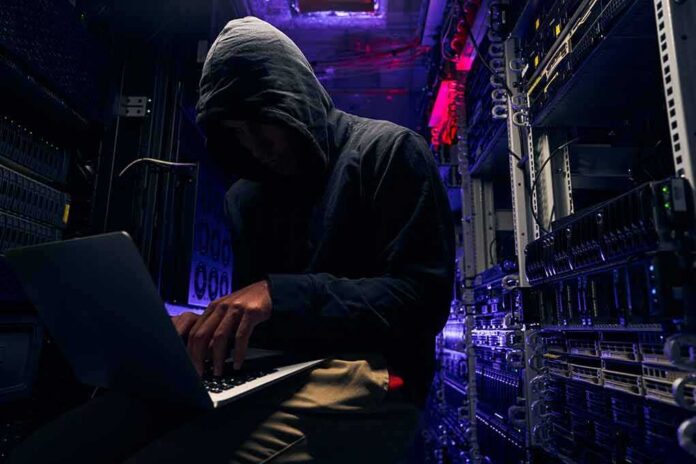
U.S. officials say they crippled a China-linked hacking platform that reached into top federal agencies, exposing how fragile core government systems remain.
Story Snapshot
- Justice Department and FBI seized domains tied to QScan and QTRouter platforms.
- Court filings link the tools to a China state-sponsored group called QTFY.
- Victims listed include the Justice Department, NASA, the Senate, and the Federal Reserve.
- China’s embassy denied the claims and accused the U.S. of smearing China.
What The Government Says It Shut Down
The Justice Department said on August 26 it seized domains that ran two hacking platforms named QScan and QTRouter. Prosecutors said QScan scanned the internet and infected many smart devices. They said QTRouter then used those hijacked devices to hide where attacks came from. Officials said the malware hard-coded the seized domains. They said that made both systems stop working once the court-approved seizures occurred.
Unsealed court papers identified a China state-sponsored group called QTFY as the operator. The filings said QTFY worked through Nanjing Xinjiuwei Network Technology Company. They described the platforms as services that Chinese state organs could use, not one-off malware samples. Government statements and press accounts said the clients included the Ministry of State Security and the People’s Liberation Army, tying the effort to state goals.
Who Was Hit And For How Long
Officials and media summaries said the targets spanned major U.S. institutions. Reports named the Justice Department, the National Aeronautics and Space Administration, the Senate, the Federal Reserve, the Department of Health and Human Services, and the National Institutes of Health. Coverage of the affidavit said the activity dates back to 2018. That suggests a long-running operation, not a one-off event. The public record does not list every victim or confirm the same level of access in each case.
These details matter for ordinary Americans. When networks at money, health, and science agencies are probed or breached, the costs land on us. Fixing and defending systems takes time and tax dollars. It can delay services that people need. Both the right and the left see a pattern here. Washington warns about foreign threats, yet critical systems still have holes. People wonder why basic cyber hygiene lags while budgets keep growing.
China’s Denial And The Evidence Gap
China’s embassy rejected the allegations. It said China opposes all hacking and accused the United States of using cyber claims to smear China and spread disinformation. That pushback fits a pattern seen in other disputes, where Beijing denies links and calls the claims political. At the same time, U.S. agencies often keep detailed proof sealed. That limits what the public can check on its own, even when seizures and warrants exist.
The Fed Was Hit, But That Is Not the Real Story
The US Says China Built Hacking Infrastructure as a Service————–
The viral version is simple:
“Chinese hackers broke into the Federal Reserve.”That is directionally based on a real US government action, but it… https://t.co/PNxFQSzc8T pic.twitter.com/G4L08uEtEl
— PetrAnto (@petranto) August 27, 2026
Experts have urged clearer standards for public attribution. Think tanks say governments should share more technical proof when they can, so people can cross-check claims. In this case, the Justice Department laid out names, tools, and targets in filings and press releases. But the most technical parts—malware code, logs, and forensics—are not public. That leaves room for doubt among readers who have learned to distrust official statements across party lines.
Why This Matters Beyond Cyber Jargon
The seizure sounds like a win, but it also shows how attackers use cheap smart devices and home routers to punch above their weight. That shifts costs onto regular people whose gear was hijacked without them knowing. It also shows how red tape and slow upgrades leave federal networks exposed for years. Many Americans feel the system protects insiders first and fixes core problems last. This episode will likely deepen that view unless agencies show real, visible improvements.
Here is the bottom line. The government says it knocked out a major platform tied to China, and it named who ran it and who was hit. China says the claim is false and political. Both cannot be right. To win public trust, leaders should release more technical indicators, invite outside review, and explain how they will harden the systems we all rely on. Clear proof and concrete fixes beat slogans, every time.
Sources:
insiderpaper.com, justice.gov, amp.scmp.com
© standardnewsdaily.com 2026. All rights reserved.