
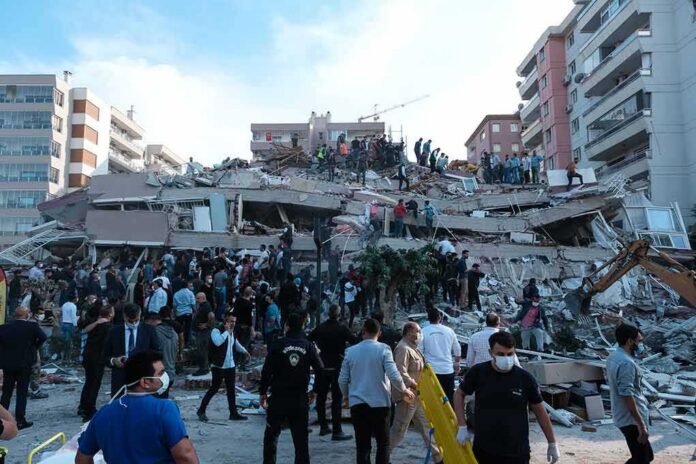
Russia’s rolling missile-and-drone assaults have turned daily life in Kyiv into a round-the-clock fight to survive, with repeated strikes killing civilians and straining air defenses.
Story Highlights
- Russia hit Kyiv and nearby areas for days with missiles and drones, killing civilians.
- Ukraine warns it lacks enough interceptor missiles to stop many ballistic shots.
- New jet-powered drones make defense harder and keep residents under constant alerts.
- Attacks target warehouses, power, and logistics, disrupting work and supplies.
Sustained Strikes Push Kyiv Into Near-Constant Air Alerts
Ukrainian officials reported repeated Russian strikes on Kyiv and the surrounding region across late summer, using ballistic missiles and waves of drones day and night. Reuters described at least three killed in early July after ballistic hits and jet-powered drones, and later reported a heavy August barrage that killed ten more. Local leaders said sirens and blasts have become routine as Russia leans on long-range attacks to pressure Ukraine far from the front.
Military briefings and wire reports say Moscow now uses rolling barrages instead of isolated raids, with clusters of drones and missiles arriving in waves to exhaust defenses. Ukraine’s air force and government figures have cited hundreds of drones and multiple missile salvos in single nights across this period. This pattern spreads fear, drains interceptor stocks, and raises the odds that even a small share of incoming weapons will get through.
Air Defense Shortfalls Leave Ballistic Missiles Hard To Stop
President Volodymyr Zelenskyy and Ukraine’s air force have warned that shortages of interceptor missiles for systems like Patriot make ballistic threats especially deadly. In several attacks, officials said air defenses downed many drones but failed to stop most or all ballistic missiles, which travel fast and strike with little warning. These gaps have kept casualties high and allowed blasts to hit key nodes even when the majority of incoming targets are destroyed.
Ukrainian briefings have tied repeated deaths and injuries in Kyiv to this imbalance: drones can often be intercepted, but one missed ballistic shot can level a structure or start large fires. Reuters reports from multiple days in July and August describe destroyed warehouses, damaged apartments, and disrupted hospital and university buildings. The pace of strikes means crews race from one site to the next while residents shelter for hours, then try to resume work at dawn.
Targets Include Energy, Warehouses, And Logistics Lifelines
Russian attacks have focused on more than military sites. Reports detail hits on distribution centers, retailers’ warehouses, and industrial facilities that keep Kyiv supplied. When these hubs burn, grocery deliveries slow, small shops run short, and prices can jump. Energy sites have also been struck, cutting power and heat for many families at times earlier this year and forcing grid operators to juggle repairs with fresh damage.
CONFLICT | BREAKING X/OSINT
**KYIV, UKRAINE** — [@Osinttechnical / @RALee85 / @GeoConfirmed] — Russian Geran-4 one-way attack drone struck the central SBU headquarters on Volodymyrska Street opposite St. Sophia Cathedral at approx. 50.450578, 30.515472. Strike targeted acting…
— Ping AI (@TextPingAI) September 5, 2026
Local testimony and photos from recent days show debris in residential streets, schools with blown-out windows, and commuters walking past taped storefronts as air defenses fire overhead. Ukrainian officials say the new jet-powered drones add to the strain because they fly faster and at low altitude, complicating interception and reducing warning time. This mix of targets and tools aims to unsettle city life, stress Ukraine’s economy, and stretch emergency services thin.
Why This Matters For Americans Watching From Afar
What happens over Kyiv ripples well beyond Ukraine. Each night of strikes tests Western-made systems, stockpiles, and promises, while costs rise for every side involved. Americans who worry about endless spending and a distracted government will see a familiar pattern: leaders argue while people on the ground face real risk. The facts on the page are simple—civilians are getting hit, critical supplies are burning, and defenses are struggling to keep up.
Sources:
youtube.com, reuters.com, bbc.com
© standardnewsdaily.com 2026. All rights reserved.