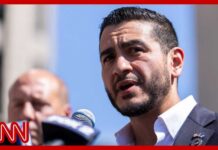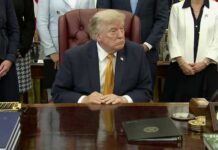
Dr. Anthony Fauci’s decision to invoke the Fifth Amendment before senators turned a long-running COVID-19 fight into a raw public spectacle.
Quick Take
- Fauci told senators he would not answer questions under the Fifth Amendment.
- The hearing was led by Senator Rand Paul and focused on COVID-19 origins and Fauci’s conduct.
- Associated Press reporting says the hearing sat inside years of accusations that Fauci lied about the pandemic.
- Invoking the Fifth Amendment is not, by itself, an admission of guilt.
What Happened at the Hearing
Anthony Fauci appeared before the Senate Committee on Homeland Security and Governmental Affairs and declined to answer questions. PBS reported that he said, “under the advice of my attorneys I will invoke my right under the Fifth Amendment of the Constitution to refrain from answering your questions.” ABC reported that the hearing was Republican-led and centered on Fauci’s handling of the COVID-19 pandemic, with questions tied to the virus’s origins and related research.
Fauci’s refusal came in a charged setting. Reuters reported that Senator Rand Paul had subpoenaed him, and ABC said Paul’s questioning was part of yearslong accusations that Fauci lied about the pandemic. The same reporting shows that the hearing was not a neutral fact-finding session. It was an adversarial oversight hearing, with Paul pressing a witness he has attacked for years.
Why the Fifth Amendment Matters Here
The Fifth Amendment protects people from being forced to incriminate themselves. ABC noted that people who invoke that protection are not admitting criminal guilt, and many innocent people do it to avoid saying something that could later be used against them. That point matters because the public often treats silence like proof. Legally, it is not.
Still, the political meaning was obvious. Fauci’s statement said he was acting on his lawyers’ advice, while he also argued that Paul’s goal was to push him toward a statement that could help a prosecution narrative. STAT quoted Fauci saying Paul’s “sole reason” for calling him was to get him to say something that could vindicate claims he should end up “behind bars.”
The Bigger Fight Over COVID-19 Origins
This hearing did not happen in a vacuum. Congress had already examined Fauci’s pandemic role, including a June 2024 House Oversight hearing record that directly stated, “Dr. Fauci did not fund research through the EcoHealth Alliance grant that caused the COVID-19 pandemic.” That earlier record also said, “Dr. Fauci did not lie about gain-of-function research in Wuhan, China.” Those findings show the dispute has already moved through formal congressional channels more than once.
NEW🚨: Rand Paul says the Senate Homeland Security Committee has scheduled a contempt vote for next week after Anthony Fauci refused to answer questions at today’s subpoenaed hearing.
Fauci invoked the Fifth repeatedly throughout the hearing rather than answer questions on COVID… pic.twitter.com/4b37sBC6v4
— Melissa Hallman (@dotconnectinga) July 29, 2026
The latest hearing shows how unresolved the broader fight remains. Supporters of the inquiry see a long-overdue check on a powerful health official. Critics see a partisan trap built to produce a headline, not a verdict. ABC, PBS, Reuters, and the congressional record all point to the same basic fact: Fauci was questioned under subpoena about COVID-19 origins, and he chose silence over answers.
What Comes Next
The key unanswered question is not whether Fauci invoked the Fifth Amendment. He did. The unresolved issue is whether the committee will push the matter further, whether it will seek contempt, and whether any future record will show specific misconduct. The material supplied here does not show an indictment, a court ruling, or a formal finding of wrongdoing. For now, the hearing adds fuel to a dispute that already divides the country.
Sources:
facebook.com, ktvz.com, theguardian.com, abcnews.com, wsj.com
© standardnewsdaily.com 2026. All rights reserved.