President Trump secured a three-week extension of the Israel–Hezbollah ceasefire after hosting Lebanon’s president at the White House, opening the door to the first serious Israel–Lebanon talks in decades.
Story Highlights
- Trump announced Israel and Lebanon agreed to extend the ceasefire by three weeks.
- Trump invited Israel’s Benjamin Netanyahu and Lebanon’s Joseph Aoun to the White House for follow-on talks.
- Aoun presented a plan to disarm Hezbollah and redeploy Lebanon’s army in the south.
- No signed framework was released, and pushback inside Lebanon remains sharp.
Ceasefire Extension Announced From The White House
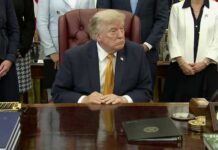
President Donald Trump said Tuesday that Israel and Lebanon agreed to extend the Israel–Hezbollah ceasefire by three weeks. He made the announcement after a bilateral meeting with Lebanese President Joseph Aoun in the Oval Office. The extension lowers the chance of a wider fight as Iran’s war rages in the region. The move buys time for next steps. It also tests whether both sides can control their forces along the tense border and stop rocket fire while talks advance.
Trump’s team framed the pause as a step toward something larger. The White House said it would work with Lebanon to help it protect itself against Hezbollah. Trump also said cutting Iranian cash to Hezbollah is non-negotiable in any deal. That stance puts pressure on Tehran’s proxy network. It also matches long-standing conservative goals to choke off terror finance and back allies who fight it with their own troops, not American boots.
Push for First Significant Israel–Lebanon Talks Since 1983
Trump invited Israeli Prime Minister Benjamin Netanyahu and President Aoun to return to Washington in the coming weeks. He called the session the first significant negotiations between the two neighbors since 1983. The Wall Street Journal reported the goal is to move beyond a stopgap and shape conditions for a durable calm on the border. The invite sets the stage. The actual talks still depend on both leaders accepting and bringing workable positions to the table.
Officials did not release a signed, detailed framework after the Oval Office meeting. When pressed on concrete terms, a senior U.S. diplomat said the public would “find out” later. That suggests the process is still in motion. It also leaves room for critics to claim the progress is only on paper. In the Middle East, announcements often face tests from militias and politics before they become facts on the ground.
Lebanese Plan Targets Hezbollah Disarmament and Army Control
President Aoun presented a plan to disarm Hezbollah and deploy the Lebanese Armed Forces in the south as Israel redeploys. The Straits Times reported that Aoun’s proposal aims to secure border towns and remove armed groups from the frontier. If applied, Lebanese soldiers would step into zones that militants once held. That shift would line up with U.S. aims. It would also answer Israel’s demand for a neighbor that controls its own territory and stops cross-border attacks.
Trump said the United States would assist Lebanese forces as they move into vacated areas. He described efforts to support those units and hold the lines as Israel pulls back. That help could include training, gear, and coordination. The approach puts local forces out front, with Washington backing them. It also fits a policy many conservatives favor: help partners stand up and keep American troops out of another long ground war.
Claims on Iran, Legal Hurdles, and Political Resistance
Trump claimed past U.S. actions degraded Iran’s nuclear program so severely that recovery could take two decades or more. Reporters noted that some details remain unconfirmed, including reports tied to specific nuclear sites. The claim sets a hard tone toward Tehran. It also signals that any border deal must limit Iran’s reach in Lebanon to last. That line appeals to Americans who want strong action against regimes that fund terror and threaten U.S. allies.
U.S. President Donald Trump welcomed Lebanese President Joseph Aoun to the White House for their first face-to-face meeting.
Aoun is expected to present a proposal on disarming Hezbollah and seek U.S. support for Israel's withdrawal from southern Lebanon. pic.twitter.com/QoMUXD7N4I
— APT News (@APT__News) July 21, 2026
Domestic politics in Lebanon may slow progress. The parliament speaker publicly slammed the framework as “sedition” and warned of civil war. Aoun insists the speaker still wants an end to fighting, but the public split is clear. Another hurdle is Lebanon’s 1955 law that criminalizes contact with Israel. Trump said he had not heard of that statute when asked. These facts show why announcements alone cannot lock in peace. Laws and factions must change to turn words into results.
What To Watch Next
Watch for quick signals from Netanyahu and Aoun on returning to Washington for talks. Look for details on how and where the Lebanese army will deploy as Israel pulls back. Track whether Iran’s money to Hezbollah actually gets cut off. Follow any steps to update Lebanese law that blocks contact with Israel. Each step will show if this is just a pause or the start of a real change. For now, the ceasefire clock is ticking, and time is the test.
Sources:
youtube.com, washingtonexaminer.com, wsj.com, washingtoninstitute.org, thehill.com, israelnationalnews.com
© standardnewsdaily.com 2026. All rights reserved.