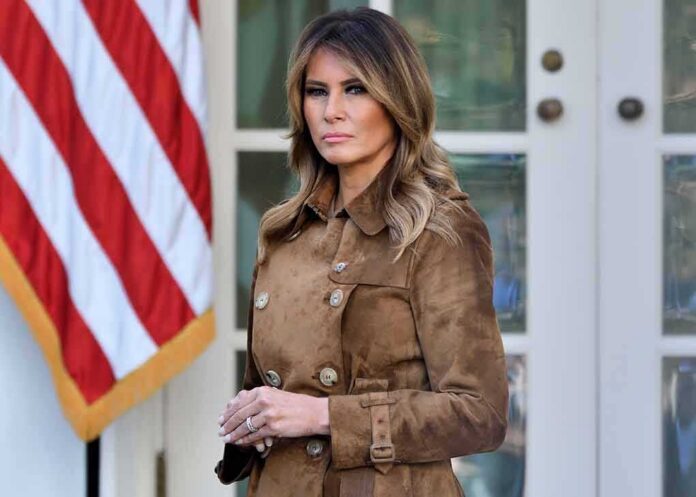
Ukraine’s president awarded First Lady Melania Trump a top civilian honor after a localized ceasefire let aid and evacuations move in a frontline city.
Story Highlights
- President Zelensky honored Melania Trump with the Order of Princess Olga, First Class, citing humanitarian work tied to Oleshky.
- Ukrainian and White House accounts credit her with helping enable a multi-day pause for aid and civilian movement.
- Reports differ on dates and the number of evacuees, and some sources question who negotiated the deal.
- The episode shows how wartime credit can be hard to verify even when relief operations occur.
Ukraine’s Award And What It Recognizes
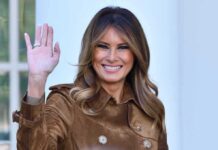
President Volodymyr Zelensky awarded Melania Trump the Order of Princess Olga, First Class, for her humanitarian support to Ukraine. The decree linked the honor to work that aimed to rescue Ukrainian children and citizens and to support aid efforts. Ukrainian and international reports tied the award to a recent local truce in Oleshky. That pause allowed aid to reach people and set up a path for evacuations from the city, which had been under Russian control during fighting.
The White House said on October 23, 2026, that both sides agreed to stop fighting in Oleshky to let aid in and prepare a safe route for civilians. The statement described the effort as initiated by the First Lady and said the truce would start later that week. It framed the pause as a practical step to get food, water, and medicine to people in need and to ready a controlled exit for families at risk inside the city.
What Happened On The Ground In Oleshky
Ukrainian officials and several outlets described a multi-day ceasefire that let teams move supplies and start evacuations. Interfax reported that the operation concluded after aid delivery and the evacuation of nearly 800 civilians, while other reports said several hundred left. The timing also varied, with some accounts placing the start on October 27 and others on October 29. Despite the gaps, the core claim was a real pause with humanitarian activity.
President Zelensky publicly thanked Melania Trump for coordinating the Oleshky effort and said the short truce helped people get out safely. Reuters and the British Broadcasting Corporation each reported that Ukrainian officials credited her with a pivotal role in organizing the six-day pause. Reports also described demining of roads and controlled movement toward either Ukrainian or Russian-held areas, which matched the stated humanitarian aims of the truce.
The Disputes Over Credit, Counting, And Dates
A summary of a Le Monde report said Russian and Ukrainian intelligence services negotiated the operation and urged caution about claims of Washington’s role. The same account said national human rights commissioners prepared the evacuation after months of talks. Russia’s human rights commissioner also disputed the count of evacuees, saying bus capacity was 750 but many buses returned empty and no headcount was kept. Those points challenge specific details, not the pause itself.
The British Broadcasting Corporation highlighted worries from residents who focused on safety and survival more than politics. It also raised questions about the choice of Newsmax to document the effort, given its ties to the Trump orbit. Snopes reported that Pope Leo XIV had urged a humanitarian truce in calls with both leaders before the announcement, but it could not verify who did what or when with precision. These factors complicate clear attribution.
Why This Matters For Trust In Government
Wartime pauses often involve many hands: political leaders, local commanders, aid groups, and monitors. That makes it hard to assign neat credit even when relief reaches civilians. The United Nations’ guidance on ceasefires notes that monitoring and verification are separate tasks and that proving who caused an outcome can be tougher than confirming what happened. In short, people saw aid move, but the paper trail on roles remains thin in public view.
Zelensky has given Melania Trump Ukraine's highest award for women, the Order of Princess Olha, after a ceasefire in Oleshky let several hundred people evacuate, BBC News reports. https://t.co/5otaE6kU2p #Ukraine
— Global Wire (@globalwireuk) November 4, 2026
Americans across the spectrum want results that save lives and respect truth. This episode delivered some relief to families in danger, which is good. But clashing numbers, unclear dates, and limited documentation feed doubts about who drove it and why. That gap fuels the belief that elites control the story while citizens get only part of the facts. Publishing the truce texts, logs, and counts would help rebuild trust while keeping the focus on helping people in war zones.
Sources:
insiderpaper.com, whitehouse.gov, independent.co.uk, usnews.com, cnn.com
© standardnewsdaily.com 2026. All rights reserved.