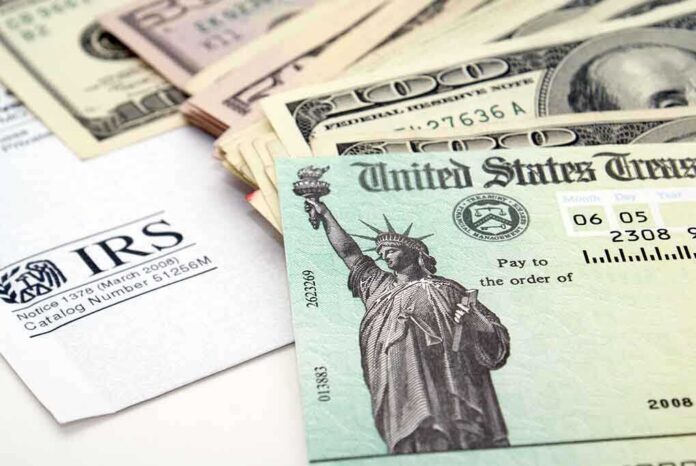
Trump’s economic team promises Americans will receive the largest tax refunds in U.S. history, delivering massive relief checks that could fundamentally reshape household finances and vindicate conservative tax policy.
Story Highlights
- National Economic Council Director Kevin Hassett predicts “biggest refund cycle ever” with massive checks coming in 2026
- Trump’s retroactive tax cuts combined with delayed IRS withholding updates create $50 billion in additional taxpayer savings
- Average refunds could jump 17% as families benefit from no taxes on tips/overtime and higher child credits
- Real wage growth of 2% demonstrates Trump’s supply-side strategy is crushing inflation while boosting worker incomes
Historic Tax Relief Promises Massive Refunds
Kevin Hassett, Trump’s National Economic Council Director and leading Federal Reserve chair candidate, announced Americans will experience “the biggest refund cycle ever in the history of America” with “massive refund checks” arriving during the 2026 filing season. The prediction stems from Trump’s July 2025 tax package that introduced retroactive cuts including eliminated taxes on tips and overtime, increased child tax credits, and additional senior deductions. President Trump separately promised families could see $11,000 to $20,000 in annual savings under his comprehensive tax reforms.
The unprecedented refund surge results from the IRS failing to update 2025 withholding tables following Trump’s mid-year tax law changes. Workers continue paying higher withholding rates throughout 2025 while qualifying for lower tax liability under the new provisions, creating substantial overpayments that will be returned as refunds. Oxford Economics estimates approximately $50 billion in additional taxpayer savings, potentially increasing total refunds by 17% compared to 2025’s $275 billion total with an average refund of $2,939.
Economic Victory Validates Conservative Principles
Hassett highlighted robust economic indicators supporting Trump’s supply-side approach, citing wage growth of 3.7% versus core inflation of only 1.6%, delivering real income gains of roughly $2,000 for blue-collar workers. This demonstrates how conservative tax policy stimulates economic growth while controlling price increases, contradicting liberal claims that tax cuts fuel inflation. The “blockbuster” November inflation report showed cooler-than-expected price growth, validating Trump’s “pedal to the metal” aggregate supply strategy that expands production capacity rather than government spending.
Despite strong economic fundamentals, Fox News polling reveals 44% of Americans feel they’re falling behind financially, with 74% rating the economy negatively. Conservative economists argue this sentiment disconnect reflects the lag between policy implementation and household experience. When families receive substantial refunds in early 2026, economic confidence should align with actual improvements in purchasing power and real wages that Trump’s policies have already delivered.
Middle-Class Families Gain Most From Tax Relief
Trump’s retroactive tax cuts specifically target working families through provisions eliminating federal income taxes on tips and overtime, directly benefiting service workers and hourly employees. The enhanced child tax credit provides additional relief for parents, while new senior deductions support retirees on fixed incomes. These targeted cuts reflect conservative principles of reducing government’s tax burden on productive Americans while encouraging work and family formation.
Lower and middle-income households will likely spend 25% to 40% of their refund increases, stimulating local businesses and economic growth throughout 2026. This multiplier effect demonstrates how conservative tax policy creates sustainable economic expansion by returning money to productive private citizens rather than wasteful government bureaucracies. The concentrated economic boost expected in early 2026 will provide tangible evidence of Trump’s economic success directly in voters’ bank accounts.
Sources:
Trump economist predicts ‘biggest refund cycle ever,’ massive checks ahead
Larger tax refunds in 2026 expected