
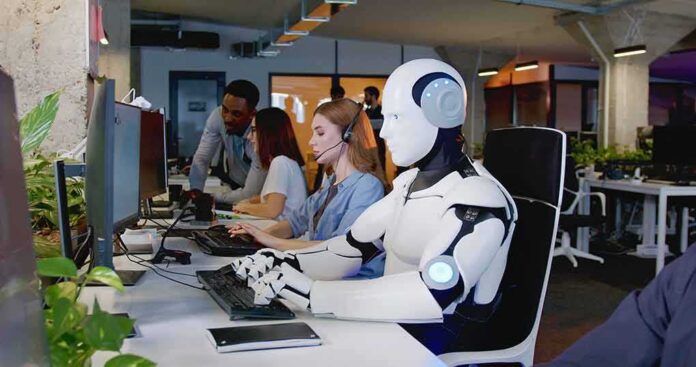
A humanoid robot just walked itself off a live production line, and the race to give robots real jobs got real.
Story Snapshot
- XPeng commissioned a humanoid robot production line; the first IRON unit walked off on its own.
- Over 80 percent of the line’s core processes are automated, signaling scale ambitions.
- XPeng targets mass production by late 2026 and deployments in 2027 across China and abroad.
- Unitree’s new G1 Plus adds dual vision, touch sensing, and a larger training model for 64 tasks.
XPeng moves humanoids from showcase to shop floor
XPeng said its humanoid robot production line is now commissioned, and the first IRON robot autonomously walked off the line in a public milestone. The company framed the event as a step from prototype to manufacturing readiness. More than 80 percent of the production line’s core processes are automated, which points to a plan for volume and repeatability, not just a lab showpiece. The message was simple: these robots are being built for work, not only for videos.
XPeng’s published targets link the line to a timeline. The company aims for mass production by the end of 2026, then initial use in XPeng stores and campuses, followed by deliveries in China and overseas in 2027, according to coverage of the announcement. That path outlines how the robots will learn on home turf first, then move into wider commercial service. One brief caveat in reporting: commissioning does not equal full mass production yet.
Why “walked off the line” matters for real jobs
Autonomously walking off a line is a symbolic but clear test: can the finished robot start up, balance, navigate, and follow basic procedures without a handler? It is a sanity check that speaks to factory discipline as much as to robot brains. You cannot scale to thousands of units if day one requires a small army of engineers. Automating more than 80 percent of core processes also supports consistent builds, which is the backbone of field reliability.
Cost and uptime hinge on that consistency. If every unit varies, then every repair becomes custom work. American conservative values favor clear accountability and measurable output. A production line that standardizes parts, steps, and tests is how you get dependable tools, not temperamental toys. The goal is simple: make the robots boring in the best way, so a store manager or a warehouse lead can count on them like a forklift or a point-of-sale terminal.
Unitree pushes senses and skills in parallel
While XPeng moved on manufacturing, Unitree upgraded the G1 Plus with hardware built for perception. The new design adds a binocular and wide-angle dual vision system, touch sensors inside the head casing, and a removable battery for about two hours of operation, according to TechNode’s report. Unitree also introduced a six-billion-parameter foundation model trained on over five million examples and 2,500 hours of real robot data, spanning 64 tasks. That pairing aims to fuse better eyes and touch with broader skills.
That approach tackles the core question: how will robots know what to do? The answer is a stack. Good cameras and tactile sensors feed context. A large, well-trained model maps goals to actions. Field deployments then close the loop by adding messy, real-world data. Hardware without data gets confused. Data without rugged bodies breaks in the wild. The companies appear to be lining up both sides of the equation at once, which is how progress compounds.
From demos to deployments: the near-term path
The public record now shows a shift from staged demos to planned workplace use. XPeng describes near-term deployments in its own stores and campuses, which are controlled but still commercial settings. That move matters because it tests navigation in foot traffic, handling of shelves, doors, carts, and customer proximity. It also creates feedback loops on battery swaps, repair workflows, and software updates that normal businesses need. Those lessons drive costs down and reliability up.
China’s “robot kindergarten” in Beijing is training humanoid robots to continuously learn through trial and error. Equipped with tactile sensing technology, the robots are being developed to adapt to changing environments, avoid obstacles and collaborate.#China #HumanoidRobots… pic.twitter.com/mXkJpeSRUo
— NewsX World (@NewsX) September 20, 2026
Benchmarks and outside evaluations are also emerging to guide that shift. Industry reporting captures a phase where pilots look strong, but broad, reliable service still needs more proof in the field. Structured tests from research groups and institutes are building standard ways to judge sensing, whole-body control, and task follow-through, which helps buyers separate polished clips from dependable tools. Standards invite accountability and reward the systems that truly finish the job.
What to watch next: proof through workload
Three datapoints will show whether these robots can handle real work. First, endurance: mean time between failures during full shifts and over weeks. Second, intervention: how often a human has to step in or reset a task. Third, range: how many distinct store or campus tasks run well enough to be useful across seasons and layouts. XPeng’s 2026 to 2027 timeline and Unitree’s push on senses and skills set the stage for those measures to move from slide decks to purchase orders.
Sources:
reason.com, xpeng.com, technode.com, blog.robo2u.com, emergentmind.com
© standardnewsdaily.com 2026. All rights reserved.