
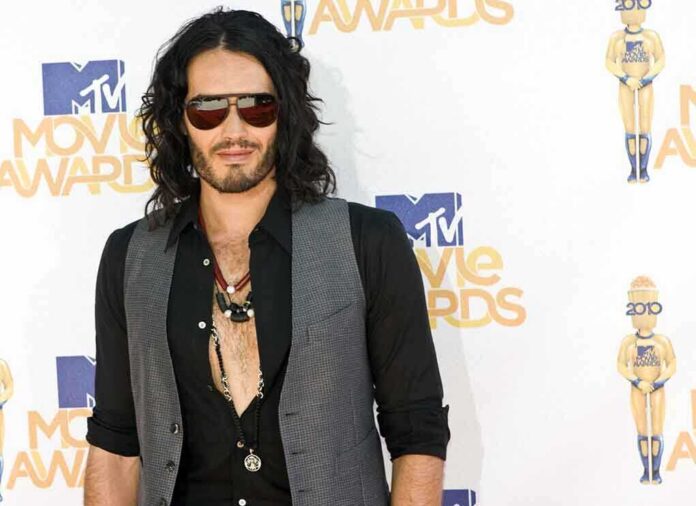
A London jury convicted Russell Brand of rape and sexual assault, capping a vast investigation and a four-week trial that tested how power and fame can shape abuse and justice.
Story Highlights
- Jury found Brand guilty of one rape and three sexual assaults after a four-week trial.
- Police gathered over 400 statements and reviewed 1,400 documents in a multi-year probe.
- Six women testified about alleged misconduct spanning 1999 to 2009, showing patterns the state argued were key.
- Jury acquitted Brand on two rape charges, signaling it weighed counts separately.
What The Jury Decided And Why It Matters
Southwark Crown Court jurors convicted Russell Brand of one count of rape and three counts of sexual assault after four weeks of testimony and arguments. The Crown Prosecution Service said prosecutors showed a pattern in Brand’s conduct as his fame grew, and the jury returned guilty verdicts on four offences. The same jury cleared him of two other rape charges. The split outcome shows jurors separated claims by evidence and law rather than accepting all allegations at once.
The Metropolitan Police said detectives interviewed more than 100 witnesses, took over 400 statements, and reviewed more than 1,400 documents. That large record went beyond the women’s testimony and gave jurors added material to consider. Police credited the complainants’ persistence and noted the case involved non-recent offences, which often come to light years later but can still meet criminal standards when supported by reliable evidence.
How The Case Was Built In Court
Prosecutors presented testimony from six women who described assaults and rapes across a decade starting in 1999. Reported accounts included anal, vaginal, and oral rape claims, with incidents linked to different points in Brand’s rise in entertainment. The state argued that similarities across separate accounts showed methods and control tied to status. The court also heard from corroborative witnesses for at least one complainant, including friends, a manager, parents, a sexual-health nurse, and an ex-boyfriend.
The defence maintained that Brand did not commit the crimes, and cross-examination tested memory, timing, and consent. Reporting from the courtroom described disputes over Brand’s recollections during police interviews between 2023 and 2025. Prosecutors characterized some answers as “selective,” while the full sequence of interviews is not publicly available in detail. The jury’s mixed verdicts indicate it accepted some evidence beyond reasonable doubt and rejected other counts as not proven.
Why This Verdict Resonates Beyond One Celebrity
This case highlights how non-recent sexual offence prosecutions work and why they are challenging. In England and Wales, a significant share of sexual offences recorded by police were reported more than a year after they occurred, reflecting barriers that delay reporting. Conviction rates vary by charge and case strength, but authorities stress that older incidents can still be proven when evidence is credible and supported by records or witnesses who heard disclosures at the time.
The trial also lands in a culture clash many Americans recognize. People on the right and left see elites as protected by money, lawyers, and media. Here, a high-profile figure faced a jury, and the state had to meet the same burden as any case: proof beyond reasonable doubt. The result shows a system that can still hold the powerful to account, while also requiring the government to prove each count separately and accept acquittals where evidence falls short.
What Comes Next: Sentencing, Appeals, And Public Scrutiny
Sentencing will determine how many years Brand could spend in prison. Prosecutors framed him as a “calculated sexual predator,” a characterization they say is supported by patterns in testimony and corroboration. The court’s job, however, is narrower: apply the law to each count. The jury’s split verdict underscores that line, and any appeal will test legal rulings, jury directions, and how pattern evidence was admitted and weighed under United Kingdom law.
Russell Brand found guilty of rape, sexual assault after bombshell trial https://t.co/LT54PExene via @usatoday
— Snuffy (@Snuffy8487691) November 5, 2026
Public access to full exhibits and transcripts is limited under United Kingdom rules that protect the identities of sexual offence complainants. That can reduce what the public sees, even when the court had far more material. Still, key facts are clear: a jury convicted on four offences, acquitted on two, and did so after a broad police probe and weeks of sworn evidence. That outcome is not a media narrative; it is a verdict with legal force.
Sources:
youtube.com, cps.gov.uk, abc.net.au, afp.com, observer.co.uk
© standardnewsdaily.com 2026. All rights reserved.